Glossary
My psychology glossary
Hello, my name is Matei Gaina, and I am currently studying Social Science : the Individual. My program is on psychology and subjects related to it. This field of study can be overwhelming at first because there are a lot of new things to learn. In order to make it easier for people to understand the slang used in psychology. I am making this glossary which will have the most common terms used in my program.
- mental health
- noun
- Psychological well-being and satisfactory adjustment to society and to the ordinary demands of life.
- Example: In order to improve my mental health I need to consult a psychologist.
- fr: santé mentale

- narcissism
- noun
- Narcissism is a self-centered personality style characterized as having an excessive interest in one's physical appearance and an excessive preoccupation with one's own needs, often at the expense of others.
- Example: Your narcissism makes it difficult for you to make friends.
- fr: narcissime

- self-esteem
- noun
- Confidence is one's own worth or abilities; self-respect.
- Example: A positive self-regard can improve self-esteem.
- fr: amour propre
- psychosis
- noun
- A severe mental disorder in which thought and emotions are son impaired that contact is lost with external reality.
- Example: A patient's needs and psychological management of psychosis using Cognitive Behavioural Therapy.
- fr: psychose

- schizophrenia
- noun
- A long-term mental disorder involving faulty perception, inappropriate actions and feelings, and withdrawal from reality and social relationships.
- Example: The exact cause or causes of schizophrenia remain unclear.
- fr: schizophrénie

- therapy
- noun
- The treatment of disease or disorders, as by some remedial, rehabilitative, or curative process.
- Example: My weekly therapy has helped me cope better with my depression.
- fr: thérapie

- ego
- noun
- Part of Freud’s model of the psyche that balances the conflict between the moral conscience and primal instincts.
- Example: The development of the ego cannot avoid cultural or social influences.
- fr: ego

- unconscious
- adjective
- The part of the mind that is inaccessible to the conscious mind but that affects behavior and emotions.
- Example: He reacted really fast and in an unconscious way.
- fr: inconscient
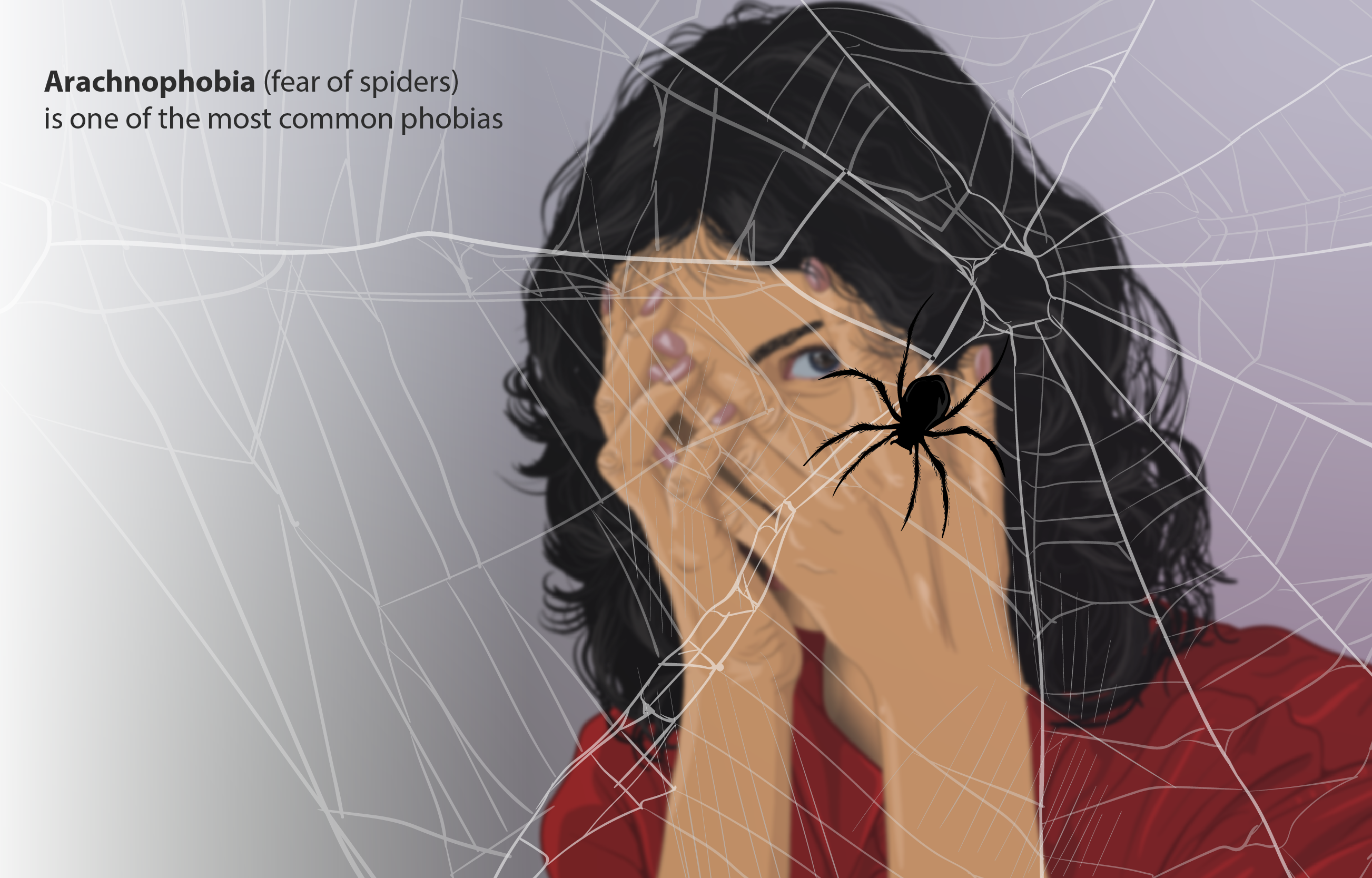
- phobia
- noun
- An extreme or irrational fear of or aversion to something.
- Example: It can be explained due to the cause of the phobia being a behavioural one.
- fr: phobie
- neurosis
- noun
- A class of functional mental disorders involving distress but neither delusions nor hallucinations, whereby behavior is not outside socially acceptable norms.
- Example: He had reoccurring symptoms of his neurosis throughout the rest of his life.
- fr: névrose
- paranoia
- noun
- A mental condition characterized by delusions of persecution, unwarranted jealousy, or exaggerated self-importance, typically elaborated into an organized system.
- Example: the voices he hears feeds his paranoia.
- fr: paranoïa
- depression
- noun
- Depression is classified as a mood disorder. It may be described as feelings of sadness, loss, or anger that interfere with a person’s everyday activities.
- Example: Seeing a psychologist helped him overcome his depression.
- fr: dépression

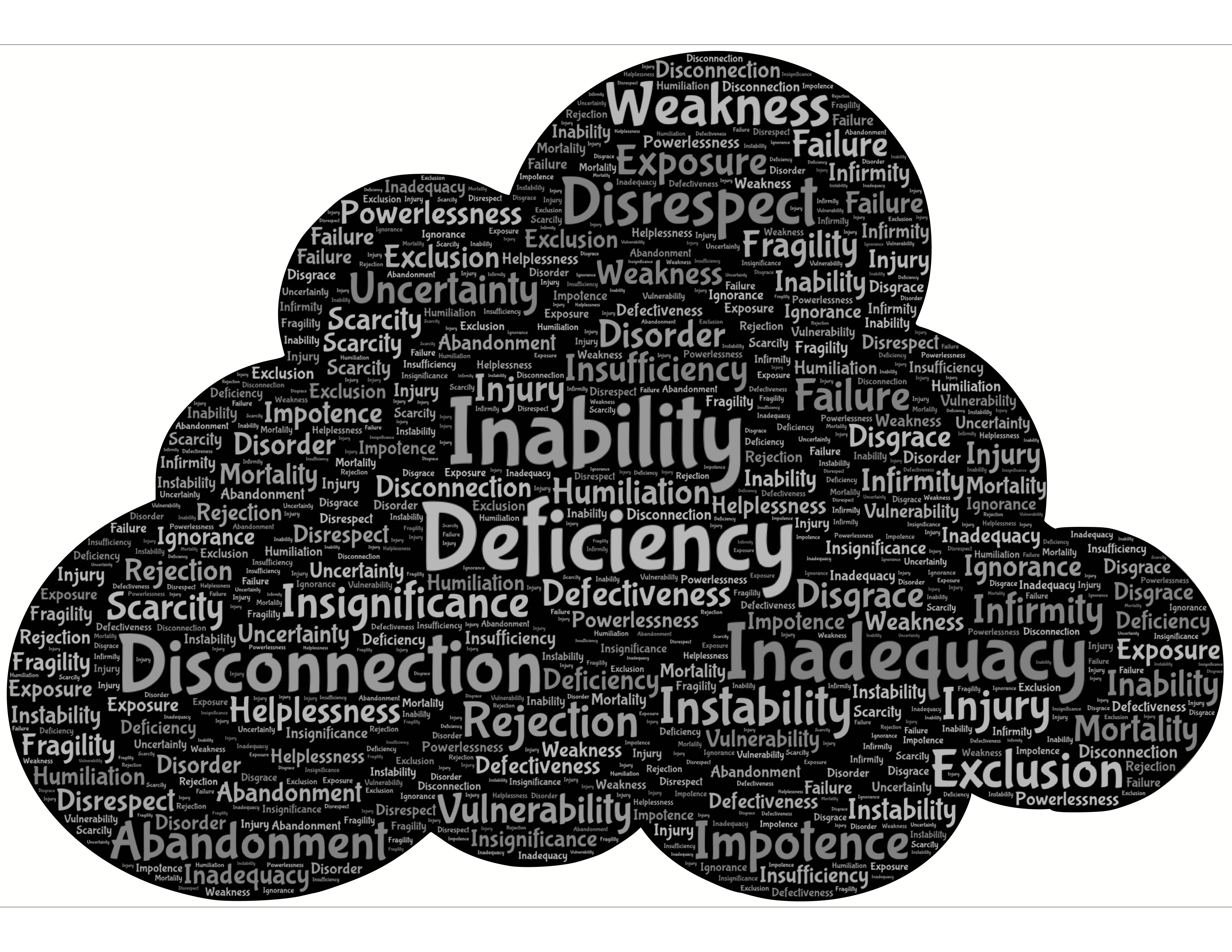
- anxiety
- noun
- An intense emotional response caused by the preconscious recognition that a repressed conflict is about to emerge into consciousness.
- Example: My anxiety makes oral presentation really difficult.
- fr: anxiété
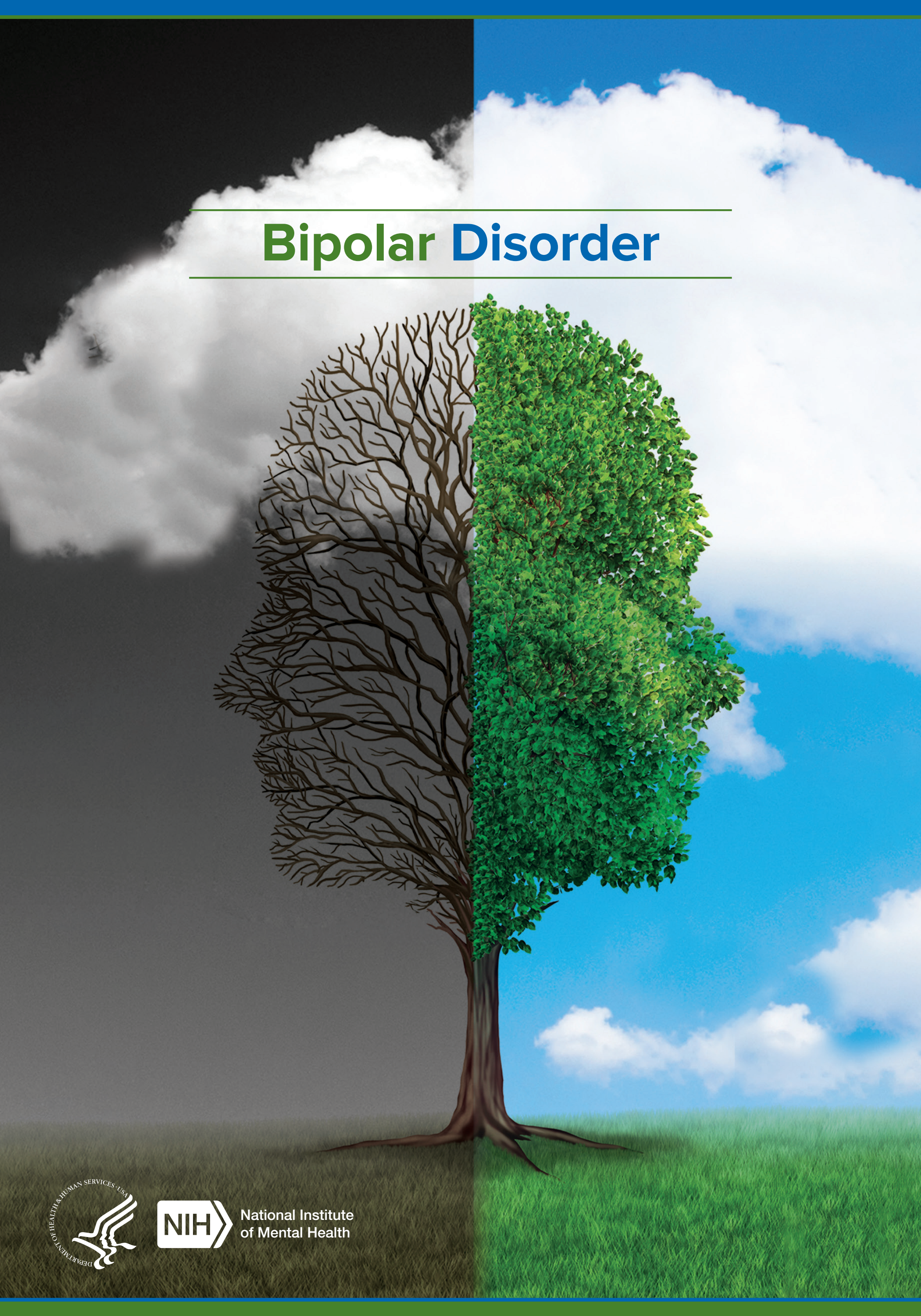
- bipolar disorder
- noun
- A mental illness that brings severe high and low moods and changes in sleep. energy, thinking, and behavior.
- Example: this is the medication to treat bipolar disorder.
- fr: trouble bipolaire
- egocentrism
- noun
- An inability on the part of a child to see any point of view other than his or her own.
- Example: All children pass a phase of egocentrism.
- fr: égocentrisme

- bias
- noun
- Feeling prejudice for or against something.
- Example: His bias influenced his decision.
- fr: biais
- catharsis
- noun
- The release of tension that results when repressed thoughts or memories move into a patient’s conscious mind.
- Example: She opted for the traditional catharsis or purging of emotion.
- fr: catharsis
- borderline personality disorder
- noun
- Personality disorder in which a person exhibits impulsive, erratic behavior and unstable relationships.
- Example: Her borderline personality disorder makes relationships difficult.
- fr: trouble de la personnalité limite

- big five
- Five basic personality traits from which other traits are derived. They include neuroticism, extraversion, openness to experience, agreeableness, and conscientiousness.
- Example: Participants were required to complete the entire big five personality test.
- fr: grand cinq

- compulsions
- noun
- Repetitive behaviors that help to prevent or relieve anxiety.
- Example: Thalamic structures could be the cause of these compulsions and obsessions.
- fr: compulsions
- defense mechanisms
- noun
- Behaviors that protect people from anxiety.
- Example: He is feeling stressed and his defense mechanism is to work out.
- fr: mécanismes de défense
- dopamine
- noun
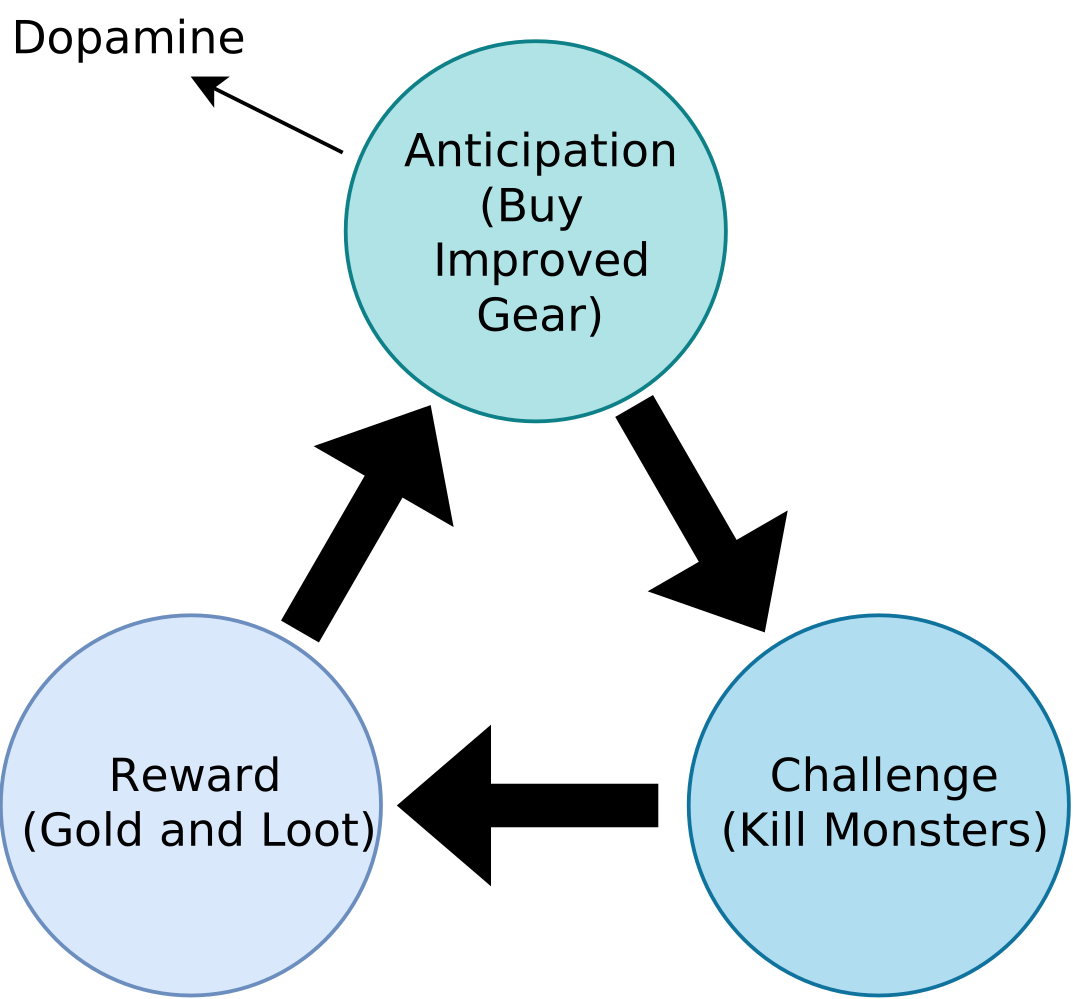
- A neurotransmitter involved in voluntary movement, learning, memory, and emotion.
- Example: There are drugs which stimulate dopamine receptors.
- fr: dopamine

- eating disorders
- noun
- Disorders characterized by problematic eating patterns, extreme concerns about body weight, and inappropriate behaviors aimed at controlling body weight.
- Example: Popular girls are more likely to have eating disorders.
- fr: troubles de l'alimentation

- humanism
- noun
- A school of thought that encourages seeing people’s lives as those people would see them.
- Example: Humanism is a philosophy oriented towards human beings, their feelings and what they have accomplished.
- fr: humanisme
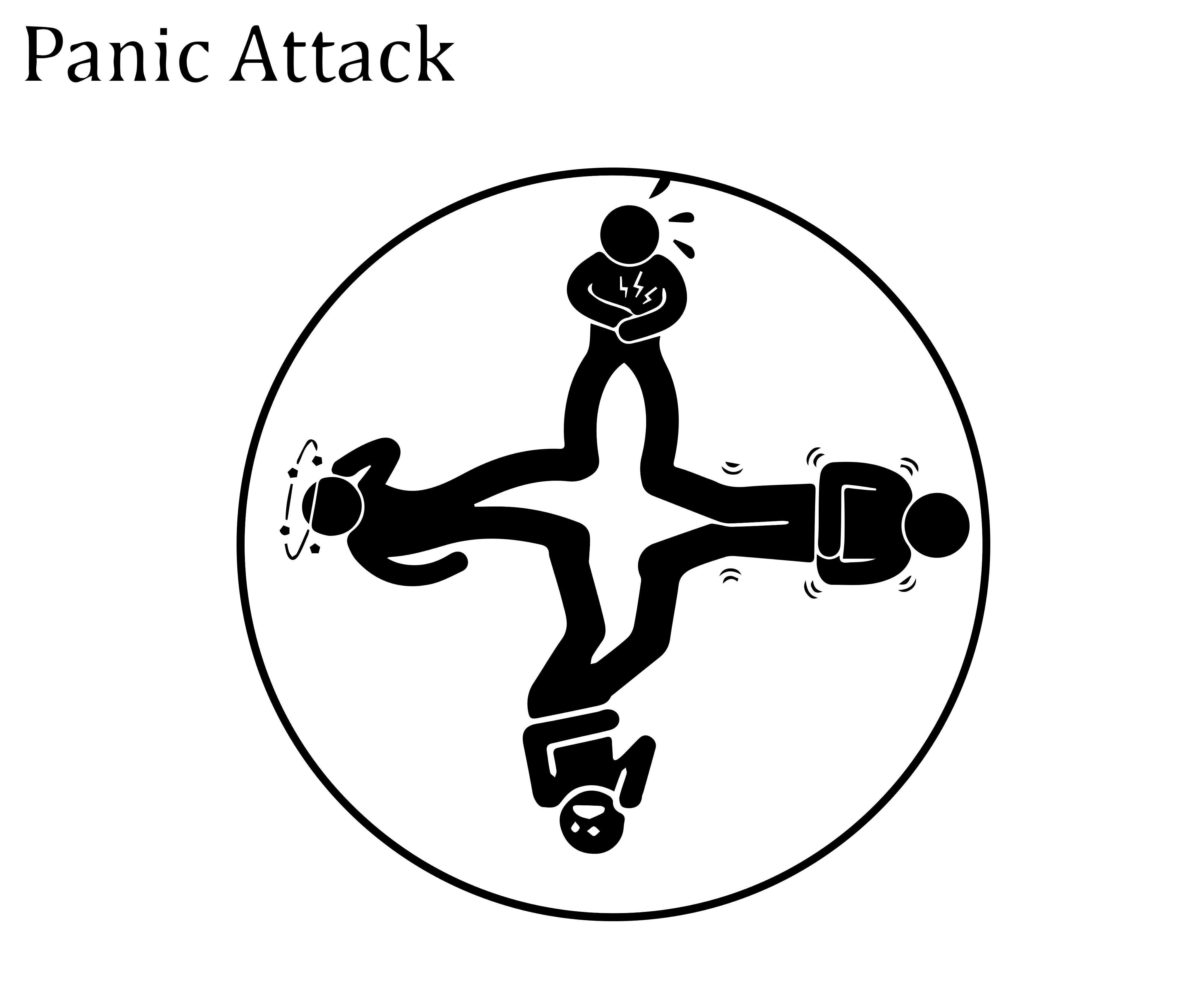
- panic attack
- noun
- A period in which a person has uncomfortable and frightening physical and psychological symptoms, including heart palpitations, trembling, fear of dying, and a perceived loss of control.
- Example: Yesterday in class I had a panic attack because I don't like oral presentations.
- fr: crise de panique